On books, goals, and coming up short
Dearest Frances,
I trust this letter finds you in fine fettle. The weather here is rather warm for winter, but you won't find me whinging about that. In point of fact, I've come to love the warm and—mostly—despise the cold in my old age. My attitude toward the weather has reversed itself since I was a kid. As you know, I grew up in a twee little mountain resort town, the kind where everyone partakes in water sports on the nearby shimmering lake in the summer and skiing and sledding in the nearby mountains in the winter. Winters were long and cold, and snow fell in heaps from October to April—and disappeared entirely from the ground no earlier than mid-May.
My attitude toward summer was, in those days, icy. On the other hand, my attitude toward winter was warm. Are you following me? Anyway, my family dreaded the warmer months, for I was notorious for heat-induced tantrums. I was happiest bundled up like an arctic explorer and meandering about the snowy, rolling hills that unfolded beyond my house. I particularly enjoyed trudging doggedly through waist-high snow mounds, paving the path I would return on.
Yes, so as I was saying before I fell into a nostalgic reverie, the weather here has been chilly but not exactly frigid. Mid-40s and low-50s for a high, mid-to-low 30s for a low. I can handle that. There is a stark difference between 30 degrees and 45 degrees, especially when the sun is shining.
How is the weather in your country?
Forgive me for going on at length about the weather. As a child, I used to scoff at adults who, clearly at a loss for something interesting to say, fell back on grousing about or panegyrizing the weather as though the subject were a metaphorical cane for their hobbled conversational skills. I don't think my conversational skills are hobbled, but the weather, it turns out, is a convenient and somewhat interesting subject. How wrong I was!
The weather is not the reason I am writing to you, however. I want to discuss books, and share with you a few thoughts on the paltry number of th I read in anno Domini 2022.
I've always been a voracious reader, a trait I credit to my dear mother, who was—and is—never without a book. Although I played video-games and make-believe games as a child, my real love was reading. That fondness for the written word continued into my late 20s—and then, unexpectedly, fell of a cliff. You see, my then-girlfriend introduced me to tennis, and I, who had remained obdurately indifferent to sports of all kinds throughout my life, fell hard for this new courtesan. I first became obsessed with playing tennis, and then became obsessed with watching it. This was, as I'm sure you can imagine, a new world for me. Embracing sports fandom was like stepping blindly into a spaceship and emerging, blinking, on an alien planet, full of strange creatures with utterly unfamiliar norms and customs. But I was game to learn those traditions, and learn them I did.
In a few short months, I went from picking up books whenever I grew bored to turning on a live or old tennis match when I didn't have anything else to occupy my capricious attention span.
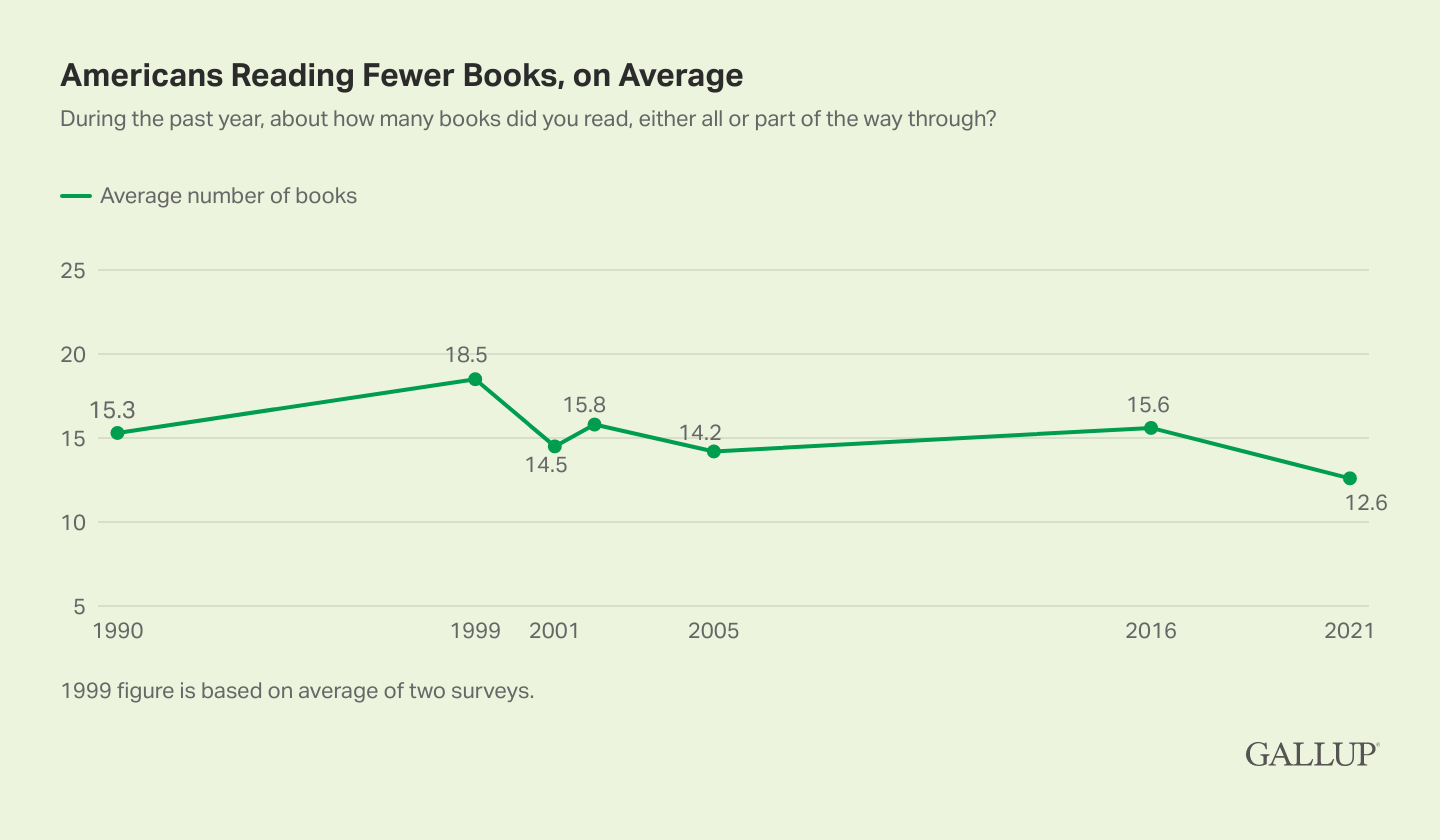
And that is why I read a shockingly unimpressive two books in 2021. This year, I've managed to read about 10—an improvement, but below the average. The paucity of books I can claim to have read this year is a source of some shame for me.
The list is presented in the order in which I read the books.
1: Cloud Cuckoo Land

Anthony Doer won the Pulitzer Prize for his 2014 book, All the Light We Cannot See. I have never read that book, though I ought to, because I found his next book, 2021's Cloud Cuckoo Land, absorbing and unputdownable in all the best ways. The book is a pastiche of genres—historical fiction, science fiction, mystery, even a little (unrequited) romance. The story unfolds across space and time, with subplots in the fifteenth-century Byzantine Empire, 20th century Idaho, and a spaceship at some unspecified time in the future. The book is lengthy and, like a semi-truck, takes awhile to pick up momentum. Once it does, though, it's becomes difficult to put down.
Doer's most impressive feat is slowly weaving together the seemingly disparate threads of the story until, in the satisfying denouement, you see how the pieces fit together into a seamless and beautiful whole. If you find yourself plodding through it at any point, Francis, my advice to you is this—just keep going.
2: The Deep Places
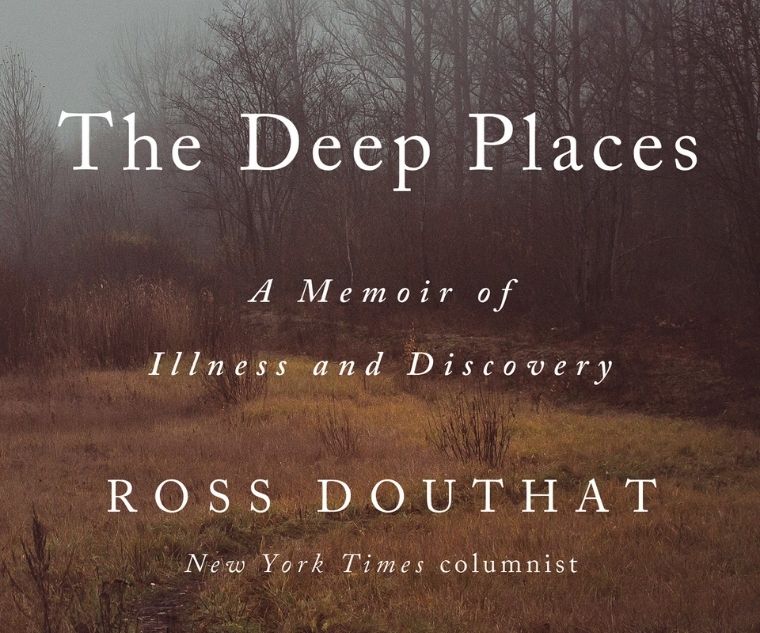
The New York Times' Ross Douthat is quite possibly my favorite conservative writer—and one of the best writers the newspaper employs. Douthat finds much to like about a right-leaning populism designed to attract support from and provide support to the working class but much to dislike about Trump. He shows in The Deep Places, his memoir about his protracted struggle with Lyme disease, that he is not only a clever and penetrating observer of U.S. politics but also a refined—and at times poetic—wordsmith.
Francis, reading this book, I confess, left me less than eager to revisit the east coast, where Lyme disease is most prevalent. Douthat writes about how a tick bit him at his home in Connecticut, the consequences of which turned out to be a yearslong struggle with a nearly invisible ailment. Like long COVID, chronic Lyme disease is little understood and rigorously downplayed by mainstream doctors. Douthat's desperation for relief takes him to the fringes of medicine, a liminal space where fanciful and fatuous theories exist alongside promising but ignored curatives.
The Deep Places isn't an easy read, but it's a challenging and haunting one that should make even the most ardent liberals reconsider their unwavering confidence in mainstream science.
3: Something Fresh

The Deep Places is a gloomy book, one that makes you grateful if you don't suffer from any chronic illnesses. The antiserum to all gloomy books is basically P.G. Wodehouse's oeuvre.
Something Fresh is one of Wodehouse's first novels, published in 1915 (a good deal before I was born, as you know, Francis). You won't find a certain aimless nob and his laconic but reliable butler in these pages, but if you've read enough Wodehouse, you will recognize Lord Emsworth of Blandings Castle. The story, like most Wodehouse stories, involves many preposterous capers. Starting a Wodehouse story is like tucking into a spongy bit of cake—you just sink right in.
Wodehouse was a prolific author, and most of his stories—whether short or not—shine brightly. Something Fresh is one of my favorites.
4: In the Distance

For much of my life, Francis, I diligently avoided the western genre. My experiences with "the western" began and ended with Louis L'Amore, whose pulpy, somewhat mindless stories didn't appeal to me.
And then, one day, I picked up a thick paperback sitting on my shelf. I don't remember where the book came from, but it had been resting among my collection for years, weighing down the shelf on which it stood, and, I believe, exerting some slow-working magic on me, drawing me ever-closer to it, like Bilbo's Ring. The book was Lonesome Dove, by one Larry McMurtry. I will write more about reading Lonesome Dove, which sucked me in like an impetuous vortex and didn't release me until the last page. Lonesome Dove quickly became one of my favorite books, and opened my eyes to a new world—westerns with significant literary qualities.
Diaz's In the Distance is a strange sort of western—and a stunning book. Håkan Söderström, the protagonist, leaves Sweden as a boy and ends up, alone and disoriented, in San Francisco. From there, the book chronicles Söderström's quest to find his brother, whom he believes has ended up in New York.
Diaz's prose, sparse but beautiful, has a vague, indistinct quality not unlike Denis Johnson's shimmering novella, Train Dreams. Söderström is a reticent protagonist, and he becomes ever more so as the book progresses. Diaz upends western tropes, making In the Distance is kind of anti-western.
It's brutal and not a bit hopeless, but the novel is so unique that you can't help but relish every word.
4: 'Salem's Lot

Who doesn't know Stephen King, Francis? The man is an American icon, a seemingly inexhaustible spinner of spooky stories. For better or for worse, I've typically avoided the kind of popular literature King is known for, although I've enjoyed some of the movies based on his work (like The Shining, for example).
This year, however, as August and its stifling, clammy heat dragged on, I found myself wishing desperately for autumn—for tawny leaves, chilled mornings, shorter days. And that put me in the mood for books that would evoke feelings of autumn.
'Salem's Lot succeeded in doing that, Francis. The book takes place in Jerusalem's Lot, a fictional hamlet in Maine, and involves Ben Mears, a writer who returns home to 'Salem's Lot (as the locals call it) to write a book and confront his demons. The writing is uneven and the pace drags a bit here and there, but nevertheless I enjoyed this vampire-themed horror story. This is a book one ought to read around autumn, as King's descriptions of the seasons are vivid and evocative.
The book did not scare me or give me goose bumps. But then again Francis, supernatural stories and myths and only rarely chill me. If you are easily disturbed or frightened, then you might find grisly depictions of vampire-induced murders a bit too much to handle. Caveat Emptor.